| Let's clear this up: If you're in your 40s, and lately you feel more snappy, anxious, or teary than usual… It's probably not stress. It's probably chemistry. Estrogen, progesterone, and cortisol play a major role in emotional regulation—and when those three start dancing unpredictably in perimenopause? You feel it. Hard. In fact, when progesterone drops (which it does first), you lose your body's natural "calm-down" chemical. And when estrogen dips? Your brain loses its serotonin and dopamine support. So what shows up? 🔥 Mood swings 🔥 Short fuse 🔥 "What's wrong with me?" spirals 🔥 Guilt, shame, and apologizing for being "too much" What's helped me and my patients? Oddly specific things, like:
You need to know that your brain isn't failing. Your nervous system is just overloaded. 👉 Read my latest blog post here. Because you're not crazy. You're just in a different chapter. And there are ways to feel better—without burning your life down. With calm (even when it's tough), Dr. Amanda |
Tuesday, 30 September 2025
You’re not moody. You’re out of balance.

Thursday, 25 September 2025
Your hormones and your mood are in constant conversation. It’s not just stress. It’s chemistry.
| If you're in your 40s or 50s and lately you've felt You might be thinking, "I'm just stressed." But let's clear this up: It's not just stress. It's not a lack of discipline. It's chemistry—and it's happening inside your body every single day. When estrogen and progesterone begin to fluctuate during perimenopause, it's like your internal communication system starts speaking in a different language. Here's what that looks like:
This is your chemistry talking. Why Mood + Hormone Health Must Be Addressed TogetherMost solutions only focus on one piece of the puzzle:🧬 Either hormone replacement/supplements 💬 Or mindset/emotional coaching But here's the truth no one's talking about: ➡️ If your neurotransmitters are depleted, emotional regulation becomes nearly impossible. ➡️ If your hormones are swinging, your nervous system stays in fight-or-flight mode. ➡️ If your emotions are dismissed, your body stores that tension in ways that impact sleep, weight, digestion, and relationships. You need a whole-body approach—one that supports your:
After treating hundreds of women in perimenopause, I've seen a clear pattern: |
Monday, 22 September 2025
A Path Back To You – Hormones & Emotions, In Beautiful Sync
| There comes a moment - almost imperceptible at first, when a woman realizes something has shifted. Her body doesn't feel like her own anymore. Her mind, once sharp and focused, now wanders in a fog. Her nervous system seems constantly on edge, reacting to even the smallest triggers. And it's not just the physical changes. It's the way her relationships begin to feel strained. The way she shows up for work, for her family, for herself. Everything feels… off. Maybe you know this feeling. You've pushed through it, tried harder, powered past the exhaustion. But no matter how much you do, it never quite brings you back to yourself. You feel tired, scattered, disconnected and underneath it all, a quiet grief for the woman you used to be. Old wounds start to resurface. Joy feels distant. The people closest to you can sense the shift, but they don't always understand it, so they are frustrated, too. This is the silent battle so many women fight in midlife - where hormones and emotions fall out of sync, and everything begins to unravel quietly behind the scenes. If you've been there or you're there now, please know this: It's not your fault. And you're not alone. And it's exactly why I'm so excited to share this with you. I've partnered with Renee Hughes, Founder of the Mood Makeover Method™—a Certified Aromatherapist and Emotional Wellness Coach who helps women regulate emotions, restore their energy, and support their nervous systems using essential oils and somatic-based tools. Why Renee? Because she gets it. Not just as a practitioner, but as a woman who's held space for others in the messy middle—when everything feels like it's changing and nothing feels like yours anymore. I've watched how Renee helps women go from feeling emotionally fragile and reactive to calm, centered, and empowered. Her work is deeply intuitive, grounded in science, and filled with compassion. I knew immediately she was the person I wanted to collaborate with. Because as a woman in perimenopause myself, I don't just understand this work clinically, I feel it personally. The frustration, the fog, the fatigue… and the desire to find my way back to a version of myself that feels aligned and whole again. That's what this partnership is about. It's about bringing hormone health and emotional wellness together because the truth is, you can't have one without the other. If you've been feeling like something's "off," or like your emotions and your body are no longer on the same team, you're not alone. And you don't have to figure it out alone either. Renee and I are here to guide you back to your energy, your balance, your joy. This is the beginning of something beautiful. And I can't wait to share what we've created with you. Stay tuned for more details… To your everlasting health, Dr. Tracy |
Saturday, 20 September 2025
I didn’t recognize myself. And it wasn’t just the mood swings.
| You know the moment, . The question was harmless. The timing? Not great. And suddenly, you're snapping. Loudly. Then apologizing. Then wondering, "What is wrong with me?" Here's the truth: You're not broken. You're just in perimenopause. And your brain chemistry has shifted—whether or not anyone told you. Nicole didn't know that either. She contacted my office feeling defeated—mid-argument with her 15-year-old daughter over who left socks in the dryer. Socks. She said, "One minute I was yelling about laundry, and the next, I was crying into a wet towel like I'd ruined everything." That wasn't the first time either. Every tiny irritation felt amplified. Her daughter's eye rolls. Her son's dirty cereal bowl in the sink. Her partner's innocent question about dinner. The edge was constant—and it didn't make sense. Nicole's sleep was fine. Her life was full. Her job was demanding but manageable. And still, everything felt like too much. What she didn't realize? Her estrogen was fluctuating wildly (impacting serotonin). Her progesterone was dropping (removing her natural "calm" buffer). And her cortisol was consistently elevated (thanks to years of over-functioning). It wasn't her parenting. It wasn't a lack of gratitude. It was her hormones—and her nervous system, begging for a new kind of support. In this month's blog, I break it all down: ✅ Why perimenopause messes with your emotions ✅ How to spot your unique hormonal mood patterns ✅ 4 strategies to soften your edges—without shaming, silencing, or "powering through" 👉 Read my latest blog post: "Snapping at Everyone? The Hidden Hormonal Culprits Behind Your Short Fuse" If you've been asking, "Why am I like this lately?"—you are so not alone. And there are answers. With you, Dr. Amanda |
Friday, 19 September 2025
The great IRONY of a $9.53 million roleplaying game
The great IRONY of a $9.53 million roleplaying gameA reminder that expensive games can't deliver on everything...
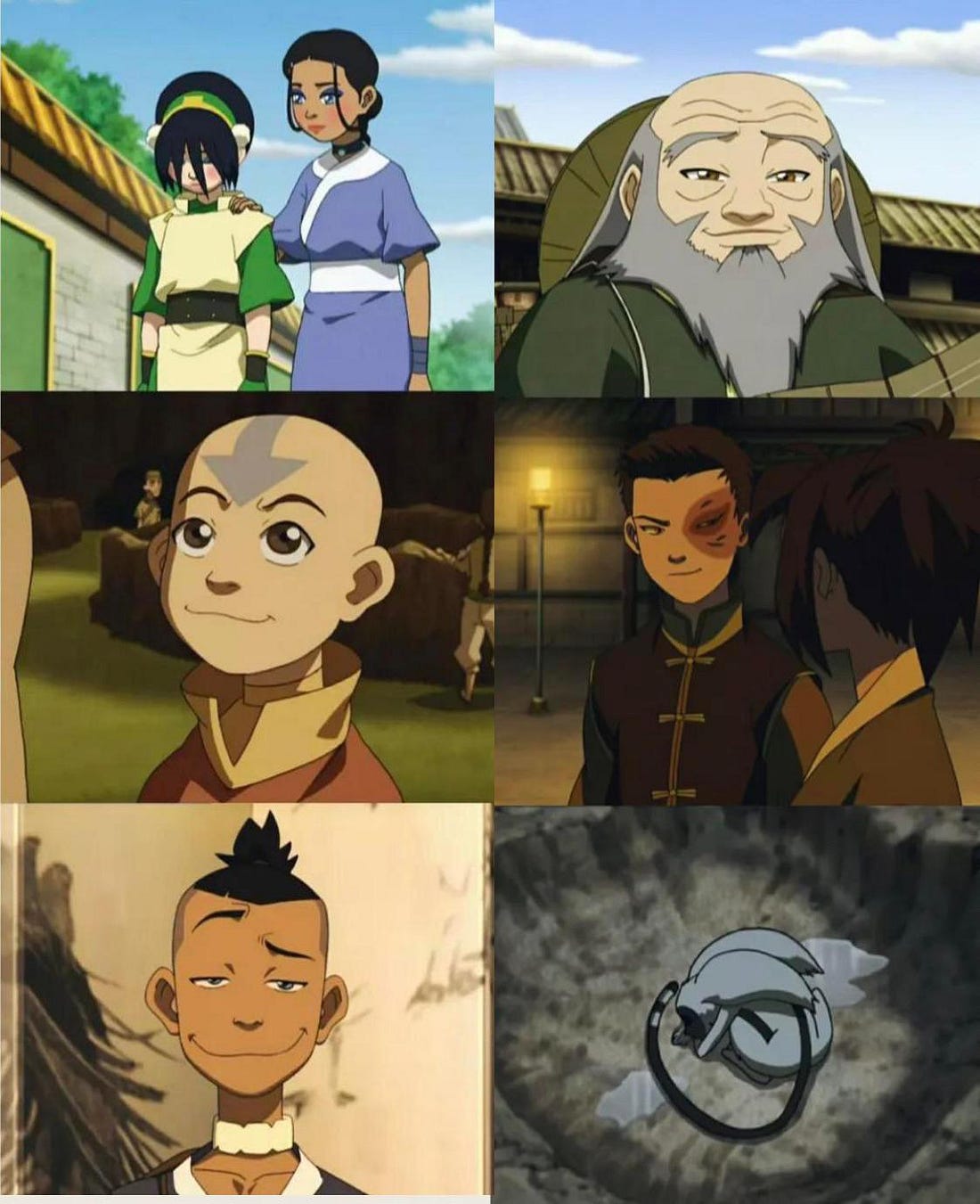
I have a great love for the show Avatar The Last Airbender. As do many people. Get this: it’s number SEVEN on the list of top shows of ALL TIME on IMDb. That's the decision of the ongoing world wide web popularity contest. And Avatar, a kids show from 2005 on Nickelodeon, made the top 10.
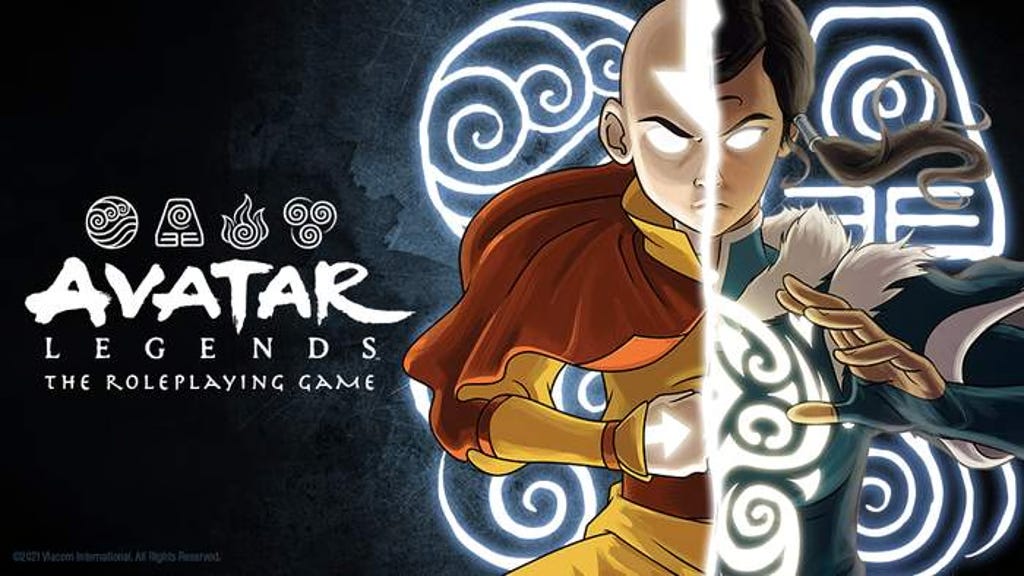
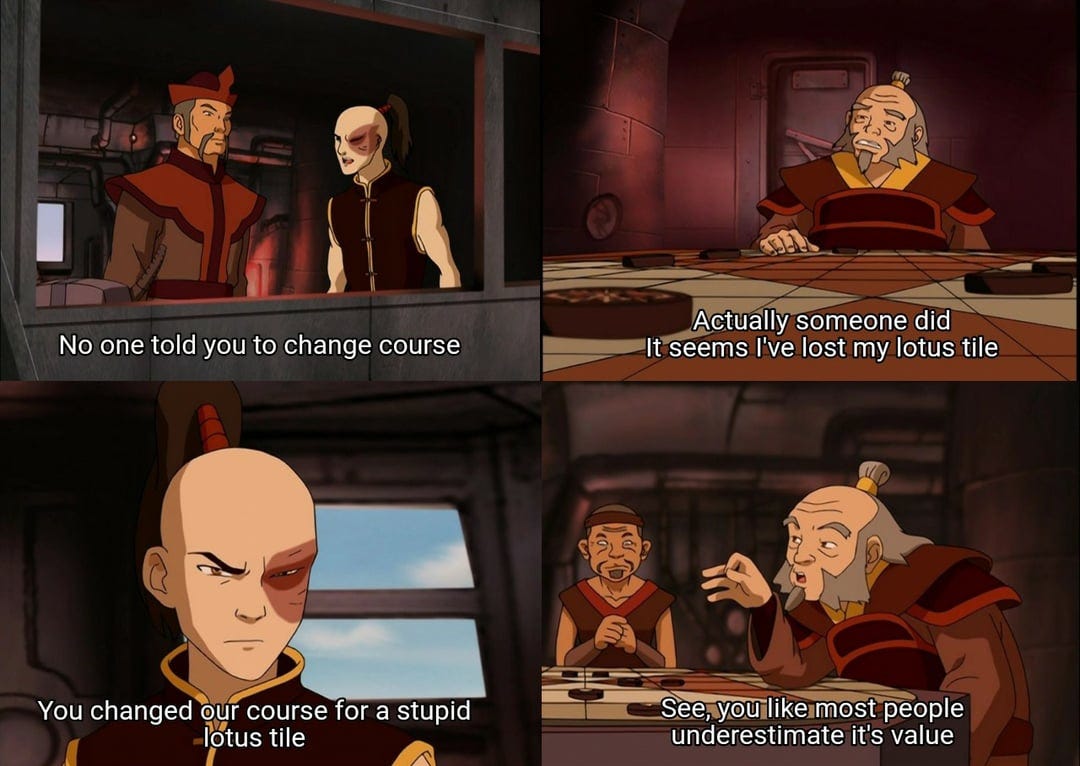
People go ga-ga for this one. So much so that when Magpie Games launched a Kickstarter in 2021 for an official Avatar roleplaying game, it was MASSIVE. Record-breaking massive. Top Kickstarters EVER massive. Over EIGHTY THOUSAND PEOPLE opened their wallets and spent over NINE MILLION DOLLARS to get their hands on these books. I was one of those people. I spent the $75 plus shipping. I got two books, five note-booklets, dice, cards, a cloth map, a dice bag, and a White Lotus tile. Grinning ear-to-ear when it arrived.
Glorious. Then I read the game. My review in one word? S'good! Absolutely, it's a game that "does Avatar". The world is there, the character and moves work, the layout and design are superb. It's a very Avatar roleplaying game. Undeniably professional, official stuff. However, something very much did NOT pass the sniff test. To back up, there are a LOT of RPGs with direct reference to movies, TV shows, and books: Star Wars, The Lord of the Rings, Conan, Ghostbusters, Aliens, Terminator, Blade Runner, James Bond, Dune, Doctor Who, Buffy the Vampire Slayer, Firefly, Star Trek, Marvel Super Heroes, Teenage Mutant Ninja Turtles, Hellboy, Wheel of Time, Call of Cthulhu, Dishonored, the list goes on. For these games, there's an obvious test to see if they hold to their source material: could the events of the source material happen IN them?
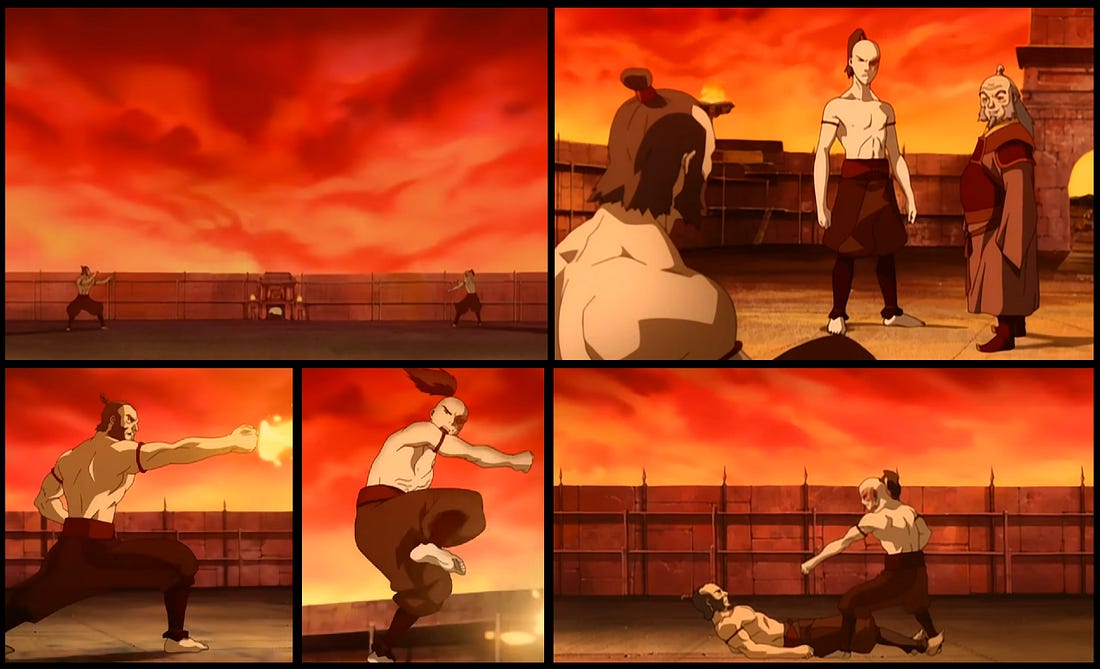
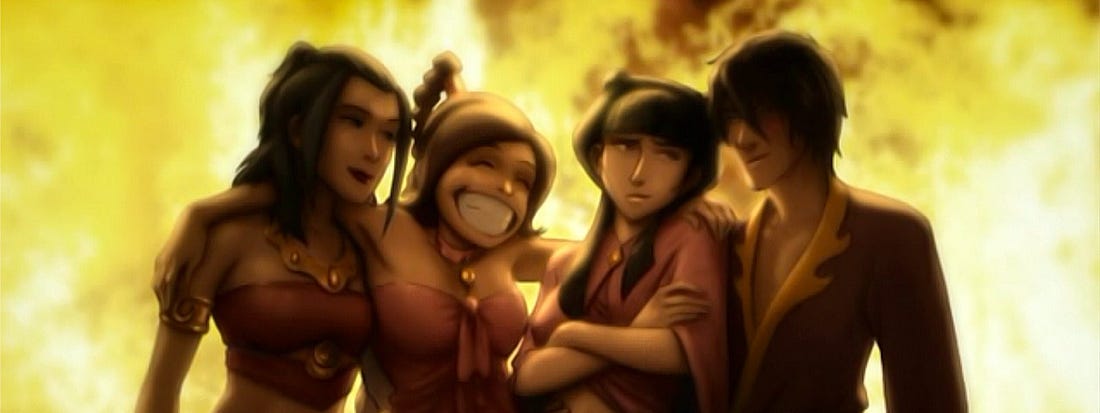
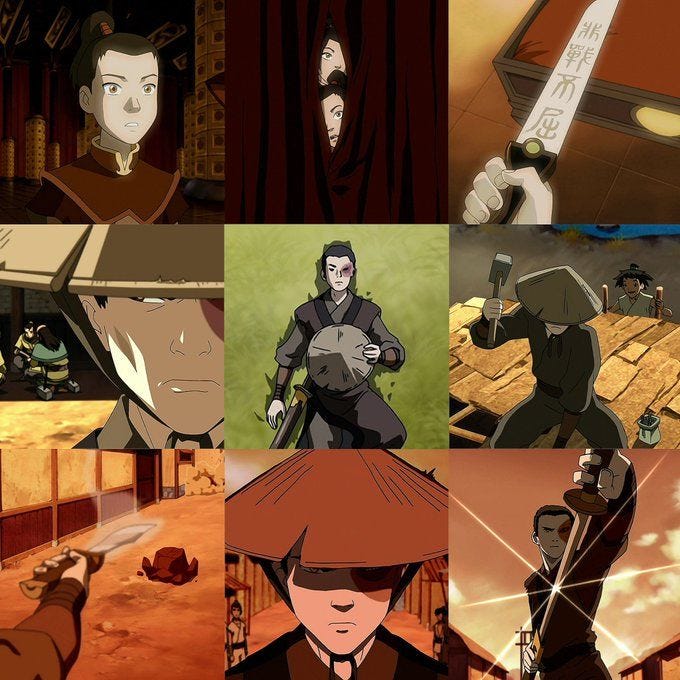
Not that you'd want to replicate those stories beat for beat, but its a litmus for these games as adaptations: Could the story of the source material happen in its officially licensed game? For Avatar, the answer is no. A heartbreaking no. Yes, that's the biggest irony of the 9.53 MILLON DOLLAR GAME: the story of Avatar The Last Airbender could NOT happen in Avatar Legends The Roleplaying Game.Lemme ‘splain,Yes, in Avatar Legends, you can do the bending. You can travel the world, hopping from village to village. You could be the Avatar. But there's a critical element (heh) to Avatar that you can't have in a traditional RPG: the B-plot.For those who don't know, each Avatar episode focuses 60-80% on Aang and his friends as they galavant around the map solving problems. But at some point, almost every episode shifts to the antagonist, Zuko, and his Uncle Iroh as they simultaneously pursue the Avatar. It's a critical piece to the story as the A and B plots weave in and out and build that compelling narrative. Traditional tabletop game structures can't accommodate two plots between opposing forces simultaneously. Traditional tabletop RPGs contain the assumptions that players' characters share goals and (most of the time) share a location. Look again at the list of licensed games above. In most of them the player characters are in the same location, though split-ups do happen temporarily. In ALL of them, the player characters share a common aim. But the Avatar story doesn't play by those rules. Major plots are explicitly seen and explained through the eyes of antagonists. And make no mistake, these are CRITICAL parts of the story of Avatar. What would Avatar be without… The Zuko versus Commander Zhao fight?
Uncle Iroh's humor?
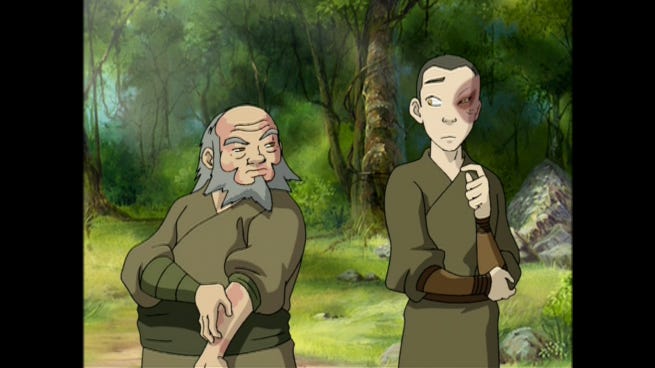
Zuko and Iroh's Earth Kingdom fugitives arc?
The Beach Episode?
The ENTIRE "Zuko Alone" episode?
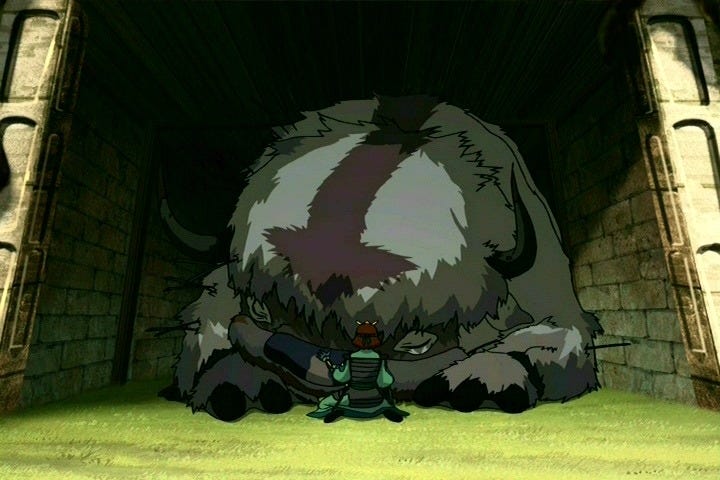
Without the ability to change the narrative focus from Aang and company (the "player characters") to other characters, we ALSO wouldn't have these entire episodes: Appa's Lost Days - an episode in which the group mount Appa takes center stage and tells a heart-wrenching vignette about animal abuse.
The Tales of Ba Sing Se - a well-loved filler episode that jumps between six different perspectives and sings a gut-wrenching song about the loss experienced in war. Even Momo gets the spotlight!
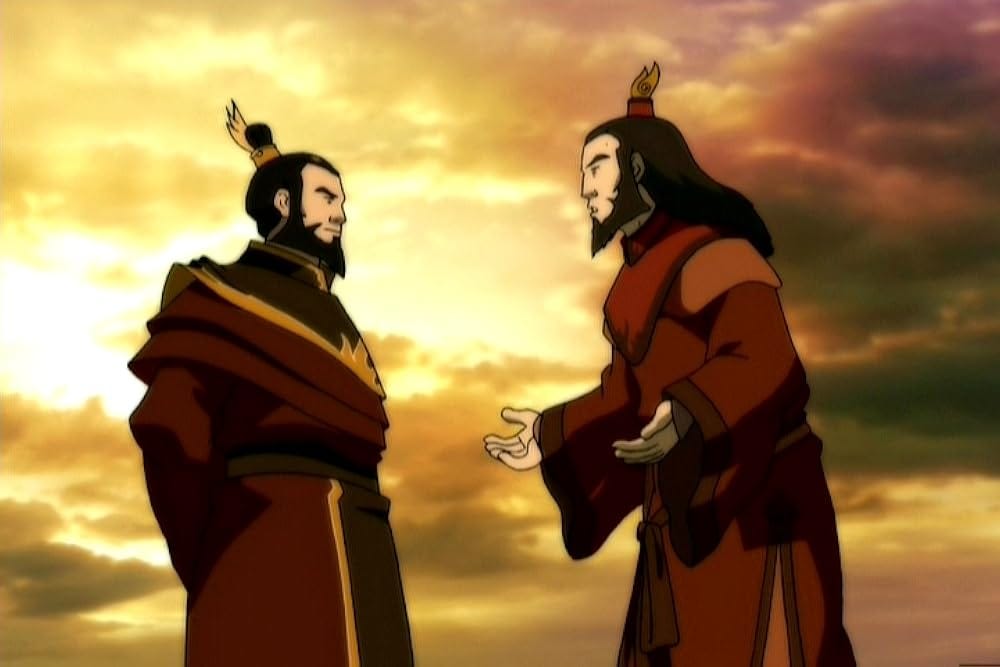
The Avatar and the Fire Lord - an episode focusing on the origins of the Hundred-Years War and the relationship between Avatar Roku and Fire Lord Sozin as told to Aang and Zuko from their combined perspectives.
Without all these great moments and episodes, Avatar The Last Airbender would not be in the top 10 shows of all time. GUARANTEED.Follow me here: the ability to shift narrative focus from subject to subject is something traditional role-playing games are NOT built to do. There are three big reasons for this: Reason #1Each player only controls ONE character (and sometimes minor characters connected to them.) If the Avatar Legends was being using to play out the Avatar show, we assume that there is one GM and three players playing Aang, Katara, and Sokka. Aang's player likely controls Momo and we'll say the GM controls Appa. What about Zuko and Iroh then? Reason #2The game only rewards characters for playing THEIR characters well. In Avatar Legends, players each answer three questions about their character and mark growth/experience points for each "yes". But again, only for their character. The actions of others, such as antagonists, does not affect their rewards. Thus, players have extrinsic rewards only for caring about their immediate circle of buddies. Reason #3The Game Master (GM) controls the WORLD. In Avatar Legends, the GM is expected to run all of the non-player characters, anyone outside the player character group and their goals. From the text of the RPG: "[The GM is] the one that needs to track what the antagonists are plotting, what decisions the PCs made last session, and how the rest of the world reacts to the companions and their heroic exploits" (p. 223). Again, this framing excludes antagonists from the players' control and field of vision. They're behind the fog of war. Now let's look at some possible ways to shoe-horn Avatar the show into Avatar the roleplaying game. We'll also say why those won't work: Solution #1The players switch their characters between protagonists and antagonists as directed by the GM. For one, this won't work because the number of characters doesn't match (from three down to two). Two, putting players in charge of their own enemies leads to insider info, also known as metagaming. The players know what their enemies know. That means they can't play either character hygienically. Three, there would be no incentives for players to play both characters optimally. Each player will favor one or the other, either implicitly or it will become obvious which is more preferred over time. This is also not hygienic play. Four, what happens when they get in a fight? Then you're no longer playing either character but playing referee. It's as lame as arm-wrestling yourself. Solution #2There are actually TWO groups of players: three players for the protagonists (Aang, Katara, Sokka) and two players for the antagonists (Zuko, Iroh). They play on separate nights. This way, every character is covered and each group has incentives to act together. This won't work either. The only person who gets to experience the whole story is the GM. Only one person becomes the audience. Now that might make a good Reddit post: telling the story about how these two plots commingle with one another, but that's outside the rules of the game. Fusing two separate games to create a whole would be like having Aang and Zuko's stories as two separate TV shows. You'd have to experience them both to piece it together. Disjointed and undignified. Solution #3The GM runs the antagonists completely. The GM reads out what Zuko and Iroh are up to during the session. Or they might send it out as a "meanwhile" between sessions. This could work, but again the GM is getting the full story as it unfolds. Only they get to see the drama of Zuko and Iroh on their adventures. It's depriving the table of the discovery. And also takes place outside the structures of the game itself. Sterile and selfish even(?). Now this seems all doom and gloom. Believe me, I get it. It's my favorite show I'm talking about here and it seems impossible to give a proper game adaptation that does it justice... My own personal flavor irony is not lost on me either. Listen, you're reading a guy who has attempted to create an Avatar roleplaying game not ONCE, but TWICE. So yes, I've given it a shot too. Those games also fell prey to the same shortcoming I attribute to Avatar Legends. But I'm not just assigning blame today, no siree. Becausee There’s a solution.Because what if, dear reader, there was a way? A game that COULD produce the story of Avatar The Last Airbender? A game that would allow you to, as a table, tell the stories of both the protagonists and antagonists? A game that wasn't set on rewarding you for "playing right"? A game that dispersed the powers of the GM and gave narrative control to its players and audience? And what if that same system could also produce the stories of all of those other licensed roleplaying games we listed earlier? Would you believe it if the rules were only 35 WORDS LONG? Are you hearing me? Because that game would be the story gameIf you've been reading these articles, you may be tired of hearin' it, but I'm not tired of sayin' it. Here’s how to play:
The big thing here is that players DON'T play a single character, everyone plays the scenario. Together. Each person at the table has the power to say what happens next, no permission needed. And all characters are on the table, not just the "main" ones. So you can check in with the bad guys. You can have that solo episode that focuses on a flying, fluffy cow. You don't need at least one character on-screen per player. You can obtain a whole new BREADTH of experience that a traditional roleplaying game doesn't allow for by championing all characters of the story. The story game completely sidesteps external rewards by not including them. There are no XP or FATE points or bennies here. Characters can get stronger and more developed during play, but that resides in the unfolding of the fiction. The only rewards are continued play, satiated curiosity, and the satisfaction of resolution. There is no "optimal play" here. There is only makes for a good story and playing to find out. The system doesn't push FOR certain behaviors. It only against disruptive behaviors in the form of the host's veto. The focus is on the whole of the scenario, not a individual character or group. And lastly, the table controls the story, not the GM. The weight of the world doesn't fall on one person's shoulders, but the interest and energy of the group.
The table drives the direction of the scenarios. Every player is a part of the process. And don't for a second sell your table short. Each player has surprises for every other player there. It only takes a good scenario and a friendly table to draw it out! So what would Avatar look like in play? Here are some scenarios from these episodes:
You could take these starting points and then, as the rules say, say what happens next. You play the scenario. As an exercise, you could even play out a scenario from the show and arrive at a similar or completely different resolution from the show. It's possible! So there you have it:the solution to this big, expensive irony of the Avatar Legends The Roleplaying Game is the title of this blog: Take a sojourn with story games. Here are some additional readings about story games to get you going on your way:
On the Story Games Sojourn podcast, we’ve done other stories not possible with traditional roleplaying games. For example: Phineas and Ferb has an A plot, B plot, AND a C plot. Imagine juggling that at the table!
Samurai Jack features a solo protagonist. That's something you can only really do in lone wolf games (1 player, 1 GM) or solo games, not at a full table.
Our Batman episode doesn't focus solely on the titular character, but on a team of gangsters. They didn't have their own character sheets!
If you have questions about story games, just reach out and I will reply there or in a post. :) After all this, it may seem like I'm against licensed games or games that attempt to replicate great media. I'm not. I'm against very expensive games that don't do what they say.So as a peace-offering to show I still love traditional TTRPGs, here are three games with very obvious "this-thing-with-the-serial-numbers-filed-off" that deserve more love. They do a phenomenal job of replicating their source material, even better than their officially licensed counter-parts.
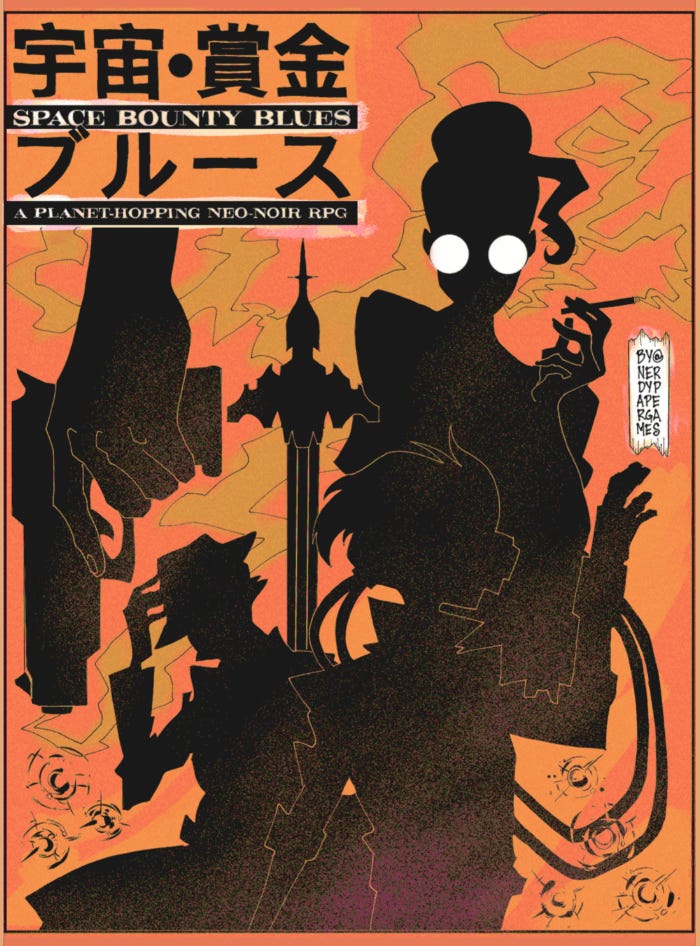
Space Bounty Blues. For replicating the TV show Cowboy Bebop. This game has ALL the style of that famous show introduction ("3, 2, 1, let's jam!") and more. It's a very slick, very smart game with tons of presentation points. Five stars.
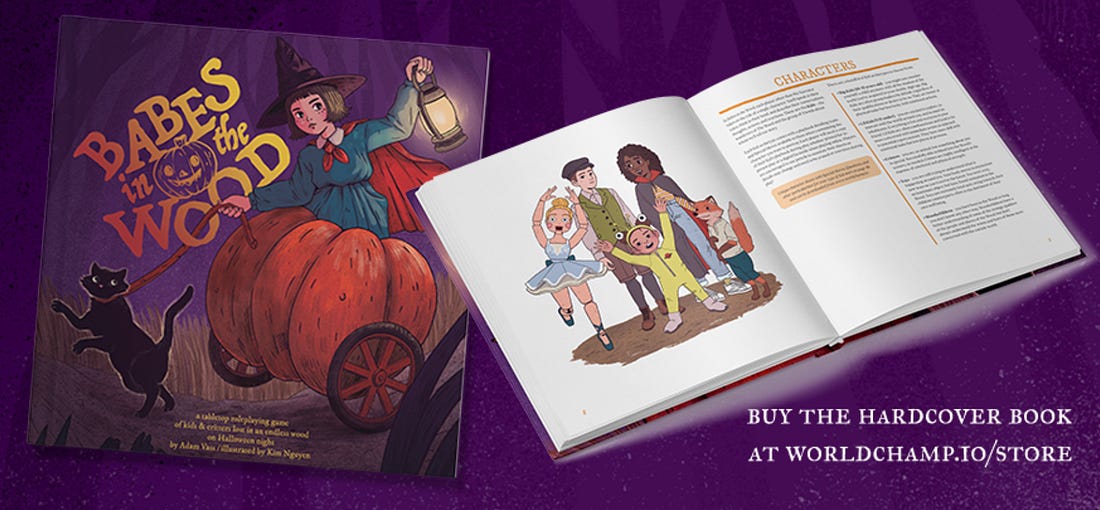
Babes in the Wood. For replicating the TV mini-series Over the Garden Wall. This game makes me wanna curl up on the couch with a tea and tell a spoopy story. It's a gem and a great hardback book. Five stars.
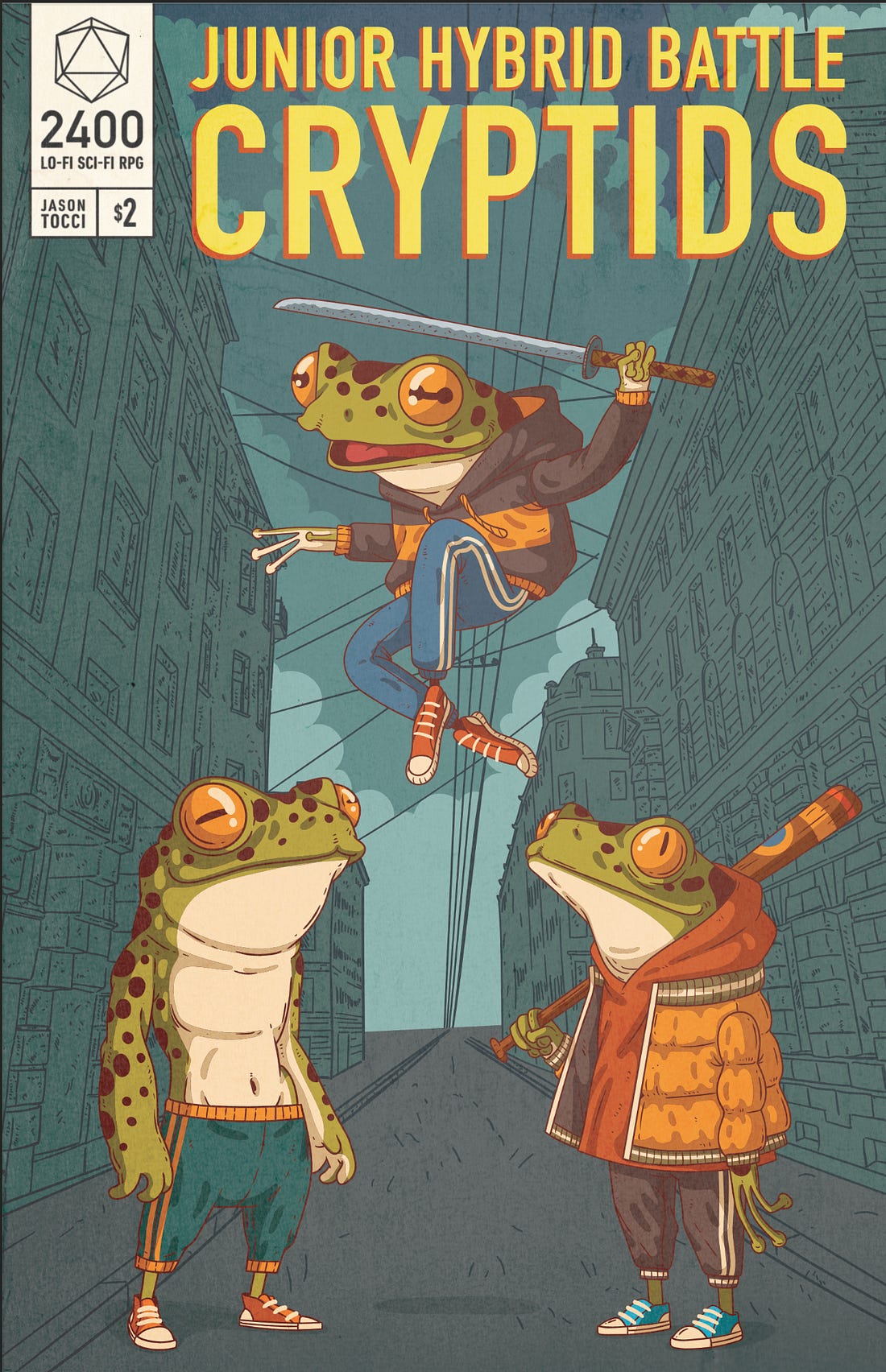
Junior Hybrid Battle Cryptids. For replicating the multimedia Teenage Mutant Ninja Turtles franchise. This game comes from the genius Jason Tocci and his punchy, flavorful 2400 system. Did I mention this is one of a dozen games you get when you fork over a measly six bucks? A generous game that does a lot with three pages. Five stars. Alright, see ya later! The Story Games Sojourn blog is FREE to all. If you wanna support this work, browse my itch.io page so you also get a game out of your generosity. Contact me directly here if you have any questions or want to tell me something cool. :)
|










Subscribe to:
Comments (Atom)

-
Hi again, , Ready for some real, concrete things you can try right now? No fluff. No platitudes. Just practical support for your beautiful, ...
-
Title: KPop Demon Hunters Author: Mark Hobin Category: Action Content: Rating 8/10 I have only a passing familiarity with Korean pop. A ha...
-
I speak to women every day who are struggling with symptoms of hormonal imbalance. They tell me they don't feel like themselves a...


