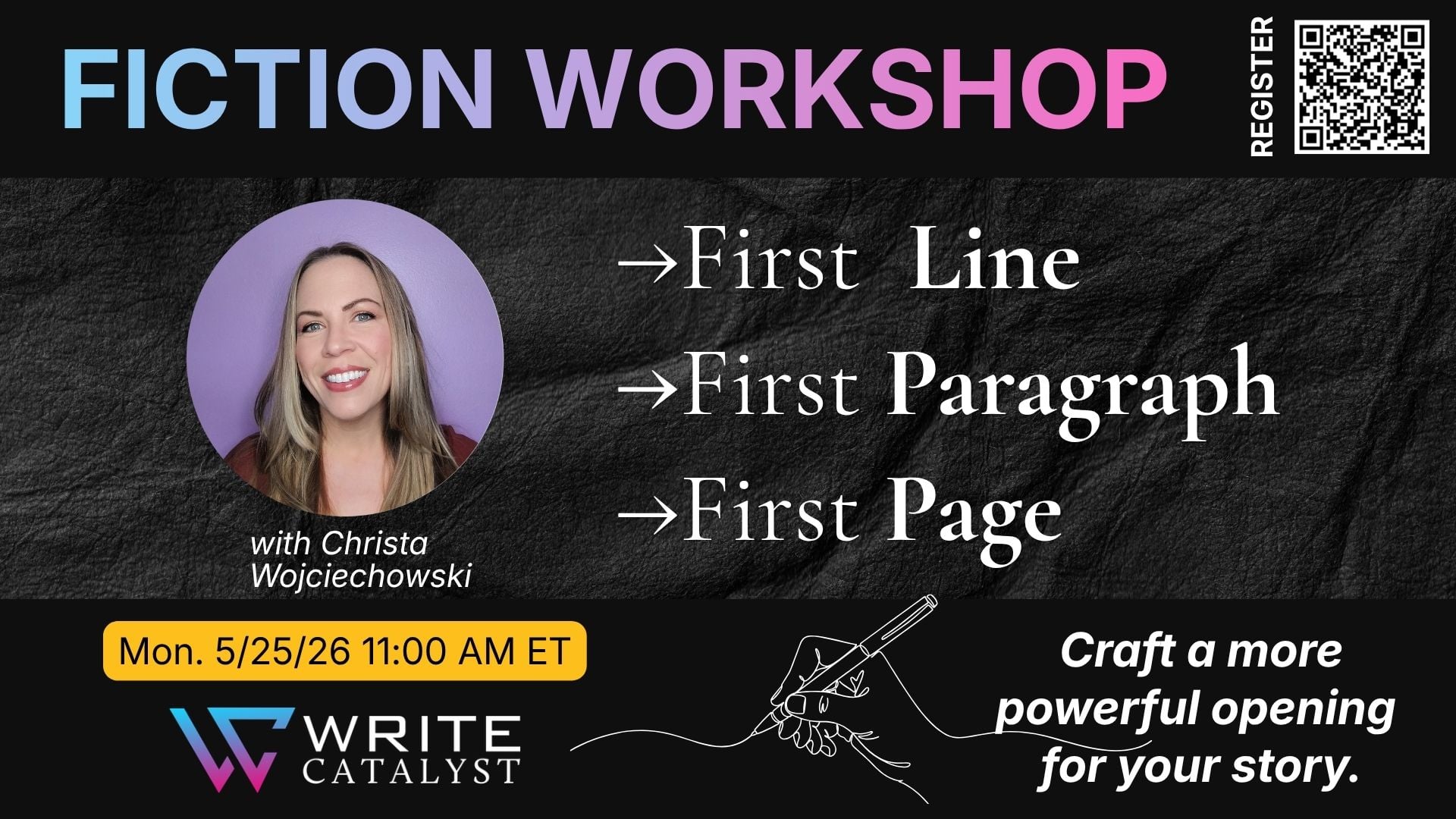
How strong is the opening of your story? Earlier this year, I was at Authorcon VI in Williamsburg and fortunate enough to share a table with one of my dearest friends and most admired writers of all time, Joseph Sale. Near the end of the convention, I decided to make my rounds and pick up a few books from authors unknown to me. As I returned to the table with haul, I showed Joseph my choices. “I hope they’re good,” I said. “Easy to tell,” Joseph said. “Did they pass the first line test?” “What’s that?” “I can tell if a book is going to be for me by reading the first line.” I stood there a bit dumbfounded. So simple, and yet, I had not thought to open the books and read a few lines before buying. So I looked at the first lines of the novels I’d purchased. Luckily, they were pretty good. But what if they hadn’t been? What if I had spent money on them, opened them up, and immediately wanted to put them down? And, then I thought … what if someone put my novels through the first line test? My books happened to be stacked in front of me on display. I picked up each one and read the first lines. For the most part, I was underwhelmed. They weren’t bad, but would they compel a person to read the whole book from just one sentence? I wasn’t going to lie to myself—the answer was no. If I were a stranger, and read the first lines from a list books, mine would not be the must-reads out of the bunch. That being said, I had written those books before I had ever taken a writing class. I didn’t think strategically about the first page. I didn’t understand why agents and publishers only wanted a few pages, or a few chapters. How could they tell if a story was any good without reading the whole thing? Then in 2023, I had the amazing experience of working for Gamut, a speculative fiction magazine. As part of the editing staff, I learned from the other side of the game how crucial a good opening was. I had to read 150 short stories per month, every month. If the first line wasn’t great, I would give the first paragraph a chance. If the first paragraph didn’t get me, I might read the whole page. If at the end of page one, the main character is still waking up and eating breakfast, it was a no go. This is what I learned from my colleagues—if I started reading a story and didn’t feel like continuing, it meant our magazine subscribers wouldn’t either, and that would be the end of the publication. A good opening doesn’t necessarily have to start off with an explosive scene, but it does have to have a hook. It can be a deftly crafted one-liner, but it also can be an extremely engaging character, a concept I haven’t encountered before, a dilemma that I can relate to. Even a slow burn can build enough tension and suspense to make a story impossible to put down. A seemingly benign beginning with just the right amount of foreshadowing will tip us off that something unsavory is about to go down. As an editor, there were times I read through stories with sluggish beginnings because of a hint that it might become something greater. And often, lackluster openers ended up being a great story. But that doesn’t matter if no one finishes it. Many readers won’t wait to see if a book gets better. Agents and publishers simply can’t afford to invest the time and money. If an author fails to get the story off the ground effectively, it will more than likely have to be rejected. You don’t have to let this happen to your stories. The First Line, First Paragraph, First Page WorkshopIn the 1st Line, 1st Paragraph, 1st Page Workshop, each student will bring the first page of one story, novel, or work-in-progress to be shared and critiqued by the group. We will analyze the first line, then open up to the first paragraph, and expand into the first page to see where we are hooked as readers and what it is that makes us want to turn the page. We will discuss the context of the whole story to see what might improve the appeal of its beginning. So look through your stories (can be published or unpublished). Let’s see where the reader takes the bait. Writing Workshop DetailsDATE: Monday, May 25th, 2026 TIME: 11:00 AM ET GENRE: Open genre FACILITATOR: Christa Wojciechowski NUMBER OF SEATS: 8 (first come, first serve) COST:
REGISTER Members register by notifying via email. REGISTER NOW. Non-members pay and REGISTER HERE. Become a member.
***NOTE: Please do not workshop stories you have entered or plan to enter into the current Write Catalyst Annual Short Story Contest.
|





No comments:
Post a Comment