We play story games because we want to play out a scenario and be surprised by the results (playing to find out!). It’s part exploration, part curiosity, part simulation, part experimentation, and part… something else. Story games give us a way to watch something unfold that we helped create but can’t fully predict. SURPRISE is that “something else”. It’s what hits us on the head and runs away, leaving us reeling and dealing with the fallout. I’ve said it many times: playing a story game is one of my favorite activities to share with the people I love. Everything I just listed (discovery, twists, emergent play) becomes even better when shared around a table. But what if you wanted to play out a scenario solo? What if circumstance or simple desire put you in the mood to explore a world, push characters into danger, and see what unfolds? What changes? More importantly: how do you keep the all-important element of surprise when you’re both the player and the “GM”? Put foolishly: how do you play peek-a-boo with yourself? Let’s break it down. Surprise requires expectations.In a multiplayer story game, your expectations are constantly being challenged, bent, or overturned by the other people at the table. You say what happens next, you make your claim, and then your friends expand it, tweak it, redirect it, or reject it entirely (perhaps asking you to roll dice). That dynamic tension generates surprise. It lets a story swerve into the unexpected without feeling random by bouncing back and forth between multiple rational/irrational human brains. In solo play, you don’t have other people to push back. So where does surprise come from? Your own expectations.More specifically: your expectations about what happens next in the story.A baseline expectation usually comes from:
If you’re playing a classic fantasy dungeon crawl and Captain America bursts through the floor, that’s not just surprising… that’s just absurd. Good surprises live within the world’s likely and unlikely boundaries as established by you. On the flip side, if your classic fantasy dungeon crawl plays out EXACTLY like you would expect, that’s just boring. Good surprises take opportunities to intervene and grab you by the ankles. Y’know: to trip you up. When something likely doesn’t happen, you’re surprised. When something unlikely does happen, you’re surprised. This is why, for all my love of coin-tosses, I don’t do 50/50 dice rolls in solo gaming. Having an even hand on two outcomes means you cannot, by definition, be surprised: both routes were equally likely, making you somewhat apathetic to what happens next. But when you say, “I don’t think Dr. G in going to make it out of this alley full of zombies…” and then the dice defy that statement, your eyebrows raise. And that’s the physiological response we’re looking for in solo experience: raised eyebrows and a thoughtful “hmm, now that’s interesting…” See? The trick in solo play is to make your expectations explicit and then give chance the ability to intervene. You know, zagging when you thought it would zig, or confirm something you thought was doubtful, or tell you that play you thought was likely goes awry. Alright, now the actual rules, you gaming ANIMAL.The seven pointed star of the story games becomes a mere five:
Aside, here’s the cutting-room floor by nature of being the only player:
The solo oracle (soloracle)is what you consult each time you say what happens next. Here’s the procedure: 1. Say what you think happens next. 2. Roll 2d6. If at least one die shows a 4+, your statement becomes true. 3. If no die shows 4+, it doesn’t happen. Occasionally: If you state something you think is unlikely, both dice must show 4+ for it to be true. This simple oracle imitates what other players do naturally: it challenges your assumptions, nudges against overly confident predictions, and interrupts you with unexpected outcomes. It also creates a rhythm of:
That’s the pulse of a good solo game. Why this worksis that when you say “what happens next,” you are stating what you believe is most likely given the situation. In multiplayer games, other players push back on those statements. In solo games, the oracle provides that friction. It creates moments like:
That’s the core of surprise: a believable world behaving in unexpected ways. Continuing the exampleof classic fantasy dungeon crawl: imagine you’re on Level 1 of a dungeon. You open a door and expect:
When the soloracle contradicts you:
This is why having expectations is essential. Solo RPGs aren’t about randomly generating chaos. If you enter with zero expectations (“anything could happen at any time”), then nothing can surprise you. Versus surprises happening relative to what you thought would occur. What does this have in common with Whose Line Is It Anyway?You did NOT just ask me that. Yeah, I know you actually didn’t… “New Choice” (sometimes called “Change”) is a game where improv actors play out a scene, saying and doing what happens next. When the host calls out “New Choice” the actor must immediately replace whatever line or action they just did with a new one, often several times in a row, until the host is satisfied. Sometimes the host does nothing and lets a few lines or actions play out uninterrupted. They don’t have to intervene, it’s just entertaining when they do. 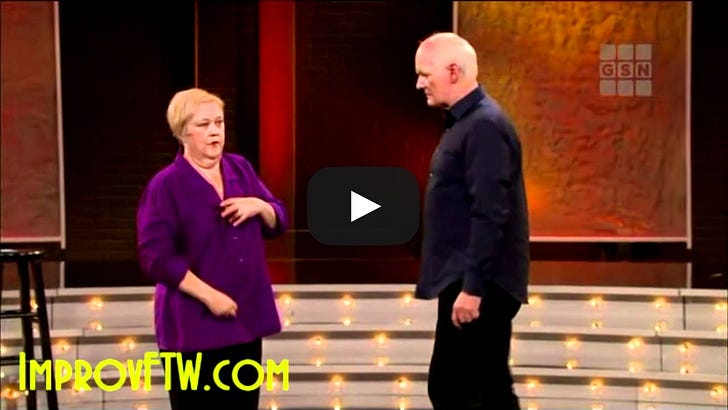 In solo story games, the dice are hosts of “New Choice”. When you say what happens and the soloracle tells you no, that’s just the game telling you “new choice.” You gotta keep digging. Try something new! Now, if you want more instances of random intervention and more “New Choice” moments, just change the probabilities. As written above, there’s a 25% chance that the dice push back on what you say, but you could change it so that everything you say is considered “unlikely” with only a 25% of being true. Now you have to test your quick-thinking chops and get to be surprised when the dice are finally “satisfied” with your second, third, or even fourth answer. Putting It All TogetherWhen you play solo:
This creates the same emotional experience as playing with others: a sense of discovery, a rhythm of tension, and genuine moments of… SURPRISE!
The Story Games Sojourn blog is FREE to all. If you wanna support this work, browse my itch.io page so you also get a game out of your generosity. Contact me directly here if you have any questions or want to tell me something cool. :)
|
Saturday, 15 November 2025
playing to be SURPRISED (ft. solo story gaming)





Subscribe to:
Post Comments (Atom)

-
Hi again, , Ready for some real, concrete things you can try right now? No fluff. No platitudes. Just practical support for your beautiful, ...
-
Title: KPop Demon Hunters Author: Mark Hobin Category: Action Content: Rating 8/10 I have only a passing familiarity with Korean pop. A ha...
-
, You're smart, successful, and you've always been able to handle a lot. So why do the smallest things feel so overwhelming lately? ...


No comments:
Post a Comment