Alright. The term “story game”. People use it as a pejorative. They say it with disgust. “YoU kNoW yOu’Re JuSt MaKiNg It Up RiGhT” they taunt, not seeing their hypocrisy and probably haven’t GM’d a whole lot. They see story games as something “casuals” do. And, in a sense, they’re right. Casuals are how we GET people into this hobby. You start as a newbie. One of my favorite things about story games is how it’s allowed me to share gaming with people who aren’t into fighting dragons with swords. Or don’t want to understand how spell slots work. Or refuse to stare at a spreadsheet to generate a character even before they’ve started their first game! The accessibility of story games is a major selling point for me: anyone can do this and tell a story with loved ones! But what ifyou want more than a “casual” experience? What if you’ve played more than a scenario or two and want more… substance? Something that stays longer? Maybe you’re favorite part of a role-playing game is where the world comes ALIVE with choices. When it moves beyond “which path do we take in this dungeon” and more towards “which of our seven contacts, each with intricate relationships of their own, can we get help from to solve a very niche problem?” Y’know, the stuff that happens around session eight or nine in a traditional RPG? What if you want to build a large, dynamic cast of characters instead being stuck following a handful of “quirky” OCs stuffed with extra narcissism? What if you want that Tolkien world-building that D&D promised and then relegated to you scribbling lore-fan-fiction in your notebook instead of using it at the table? This post is for you. The Anthology Story Gameis an idea that emerged purely from thinking about what kinds of stories traditional role-playing games can’t tell. Like I talked about before: you can’t do Avatar with it’s protagonist/antagonist storytelling:
And solo protagonists, like Samurai Jack, can’t be done in trad RPGs except in “lone wolf” situations, but we did it in a story game:
But what about large-sprawling-cast-dramas like Game of Thrones? Can you do Game of Thrones with D&D 5e? Only with a table of VERY bored players, waiting around for their “chapter” to emerge. See, each scene and chapter in that monumentally ex-popular bookseries/show had a different focal character; you see everything from their perspective. Each character sheds new light on the world:
Or what about The Lord of the Rings? If you were running it in a traditional RPG, you wouldn’t be able to hand the multiple plot-threads between Frodo and Sam, Aragorn and Company, and Merry and Pippin/Gandalf. Especially where these threads deviate from each other to different locations. Imagine it at the table: the GM talks to Frodo and Sam about Shelob’s Lair with Frodo unconscious, then moves over to talk about the Battle of Pelennor Fields with the rest of the gang and moves through different elements of the fight. What do the other players do? Sit there lookin’ pretty. Jumping around like this, handing all these situations, is something much larger than a traditional RPG can handle. It is also bigger than a single scenario or session of a story game can handle. So how would you handle it? Just as would you to eat an elephant: one piece at a time. Multi-scenario setupsare the driving force of an anthology story game. The premise is simple: Once a scenario resolves, the table can posit the next scenario.Does it take place in the same part of the world? Or with different characters? Or much later after the last scenario? Up to y’all. Personally, I’d love to have a running list of scenarios that each contain the pitch, the characters, and locations involved. Have those written on index cards or someplace visible, almost like a menu of quests for everyone to choose from. Each night you pick one and see where it goes. Maybe you get to more than one in as single sitting, who knows! Jumping back to the LOTR example, an epic like that might have one over-arching scenario: “The One Ring has been found and must be destroyed or Sauron will rule all of Middle-Earth.” But then the individual scenario play sessions might read like: “Frodo and his friends need to escape the Shire and get to Bree” or “The Council of Elrond comes together at Rivendell to discuss the fate of the Ring” or “Gandalf and Pippin arrive at Minas Tirith and things look worse than they thought.” The over-arching scenario of LOTR gives shape to the direction of the world, but it doesn’t have to determine its speed. This could take three sessions or thirty or more! Another example of how this might work: one scenario might set up an initial protagonist and how they handle a small, local problem. The next might be from the perspective of a villain and the obstacles they seek to overcome. The next scenario might deviate further, highlight a bigger, badder villain but in a more toned-down situation that is resolved in a few scenes. The next scenario could cut back to the protagonist, but years later, having acquired more experience. Perhaps they’ll take on our first villain? Or ask them to set aside their differences and take on that bigger, badder villain? Play to find out! The game expands and blossoms FAST. Because now we're playing the WORLD and not just a single scenario. There’re shared times or places or characters tying this world together and producing that cohesion and complexity that makes it feel ALIVE. And the table works together to produce this magic. If you’re familiar with Ars Magica, you know I’m going next… Troupe Playis just like that collaborative storytelling structure that gets everyone involved and thinking about the world from more than one point of view. In Ars Magica, each player comes with a main wizard character, a companion, and “grogs”, which are minor characters. Just from the start you’re working with a varied palette of power and interests. The stories you tell start with picking spotlight characters and moving from there. Everyone is a part of the “writer’s room”. It breaks players out of the “beautiful and unique snowflake” mentality when they regularly play a minor role in someone else’s story. You aren’t the center of the universe as a brooding loner type, you’re connected to other souls of the world. And it get’s Game Masters out of the “I have to manage every NPC in the world and make them interesting” trap. Now, it’s on everyone: if a character isn’t that interesting to you, what are you going to do about it? This creates that interconnected saga that gives such weight and impact to these deep epics.Which leads me to that flagship epic of Cartoon Network that kept them afloat:
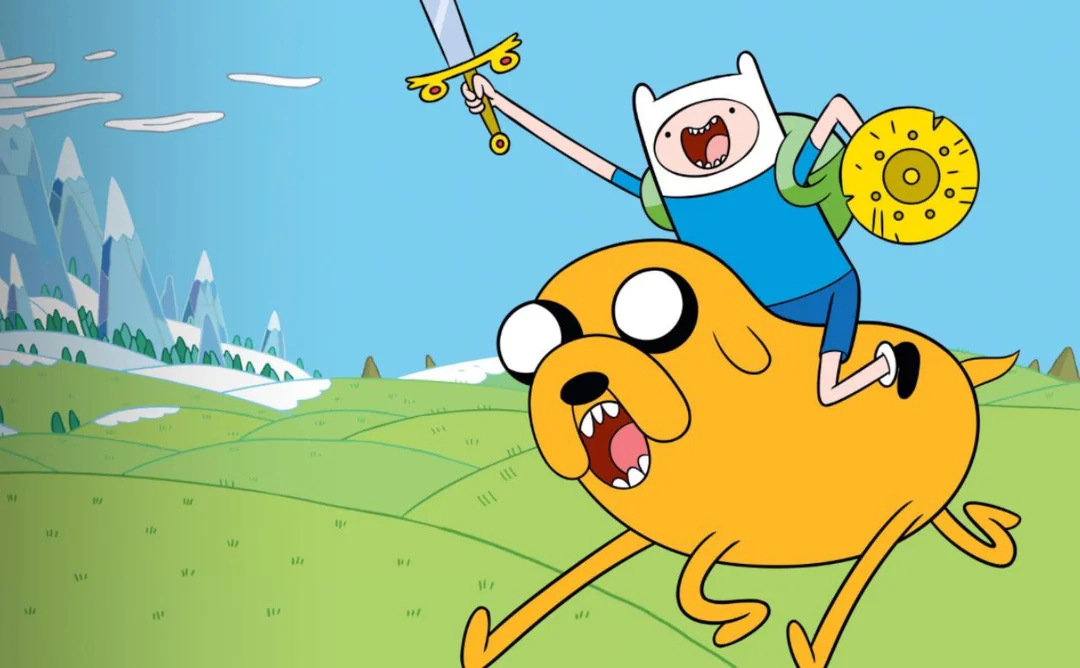
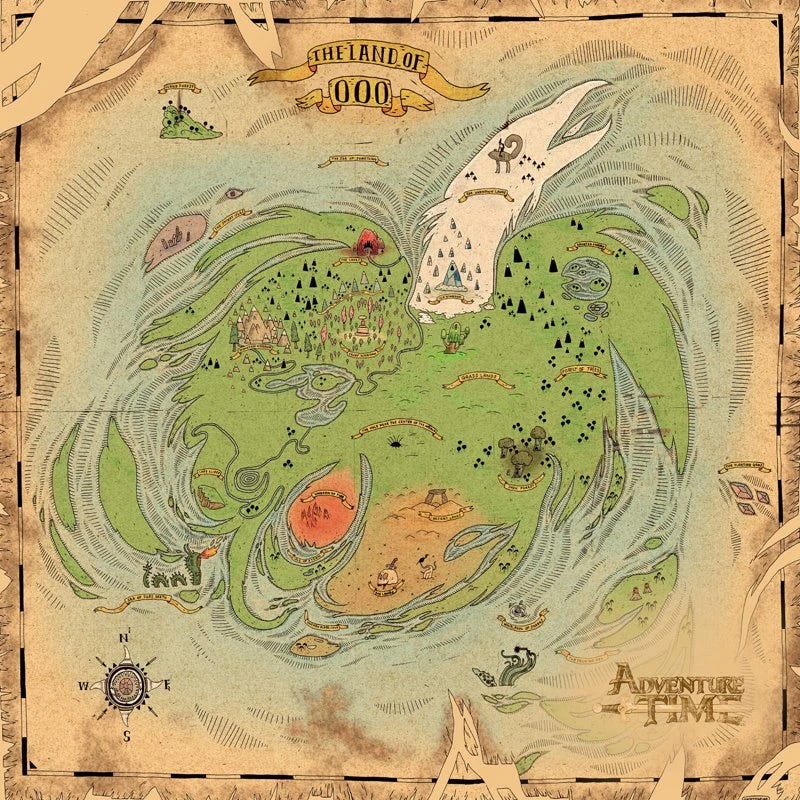
Adventure Timeclaims to be about Jake the dog and Finn the human, according to the melodic intro, but the scope exceeds those two characters MANY times over. Y’see, Adventure Time moves around a lot as the writers of the show dictate through their interest. One episode might be a classic Fann and Joke adventure and then the next focuses on a side character, like Princess Bubblegum or BMO or the Ice King or someone extremely minor. And sure, Funn and Junk might be in the background or say something at the beginning before promptly excusing themselves, but they’re not the player characters in play all the time. And this is how we explore the world of Ooo, through individuals and character groupings. A science-y character might reveal more about the laws of magic in this world or their complicated relationship with their next-door neighbor. A king of ice might show us what a frozen kingdom is like… or their tragic backstory through a long lost VHS tape. The scenario could be that of the gods above arguing about the fate of a continent or what they want to cater for a birthday bash celebration.
And thus the world builds layers through the points of view the table takes out for a spin: The world becomes more epic the more we establish and work through legendary demigods and earth-shattering scenarios. The world becomes grittier when we champion the warriors and monsters in mortal combat and great battles. The world becomes cozier when we focus on small folk in their little corners of the world handling tiny, everyday problems. And we do this by having a stable of characters for everyone to choose from instead of creating your own “personal avatar” player character that only you can play and inhabit. Finwith a confession: I haven’t done this yet. I’ve played dozens of story games now, but haven’t strung them together except by occurring within the same world (as in, doing two unconnected scenarios of Scooby-Doo). Truly a fascinating experiment. But I think this is where story games go from a casual, hobby endeavor to something VERY involved. Something STEEPED in world-building, flavor, and story potential. Something that GROWS and CASCADES and SPINS-OUT into whole ‘verses of possibility. This is a future of open table gaming, something I’ve been very passionate about in tabletop adventure games: a shared narrative experience that doesn’t rely on the presence of one player or one character or even one GM to glue things together. An experience that could be a one-off for a newbie/casual player or a whole obsession “BIG THING” for someone else. Just a world made of a list of nouns and a running list of scenarios to play. Play to find out! The Story Games Sojourn blog is FREE to all. If you wanna support this work, browse my itch.io page so you also get a game out of your generosity. Contact me directly here if you have any questions or want to tell me something cool. :)
|
Friday, 24 October 2025
Play a story game with glee, try it out: ANTHOLOGY





Subscribe to:
Post Comments (Atom)

-
Hi again, , Ready for some real, concrete things you can try right now? No fluff. No platitudes. Just practical support for your beautiful, ...
-
Title: KPop Demon Hunters Author: Mark Hobin Category: Action Content: Rating 8/10 I have only a passing familiarity with Korean pop. A ha...
-
, You're smart, successful, and you've always been able to handle a lot. So why do the smallest things feel so overwhelming lately? ...


No comments:
Post a Comment