We don't need another conflict to get the game goingIt says something about our culture that we NEED problems to ignite our fiction... but what that means I refuse to elaborate.
When people hear “story game,” they often assume it means something like Dungeons & Dragons: adventurers fighting monsters, world-ending problems that need solving, conflicts to be resolved. And fair enough, both of these forms have their roots in wargaming (I’ll explain the history of the modern story game someday soon) But this little ruleset that I keep blabbing about flips the need for conflict on its head:
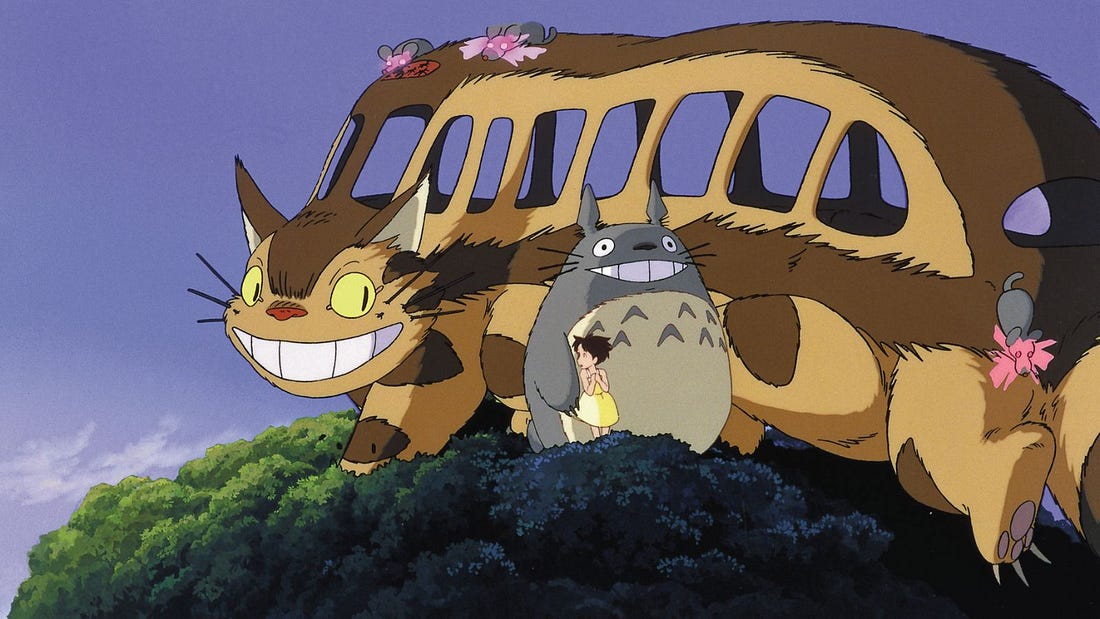
Notice that word in the first and last phrases? Scenario. Not “problem.” Not “conflict.” These games thrive on situations. They don’t have to be fights or crises (though they can). Scenario vs. ProblemA problem demands fixing: the dungeon has a dragon, Samurai Jack has to get back to the past, Mystery Inc must find the monster’s identity, Batman must put Joker away behind bars. A scenario, though, is simply a situation worth exploring. It might carry tension, or humor, or mystery, but it doesn’t have to revolve around winners and losers. Think of Hayao Miyazaki’s My Neighbor Totoro.
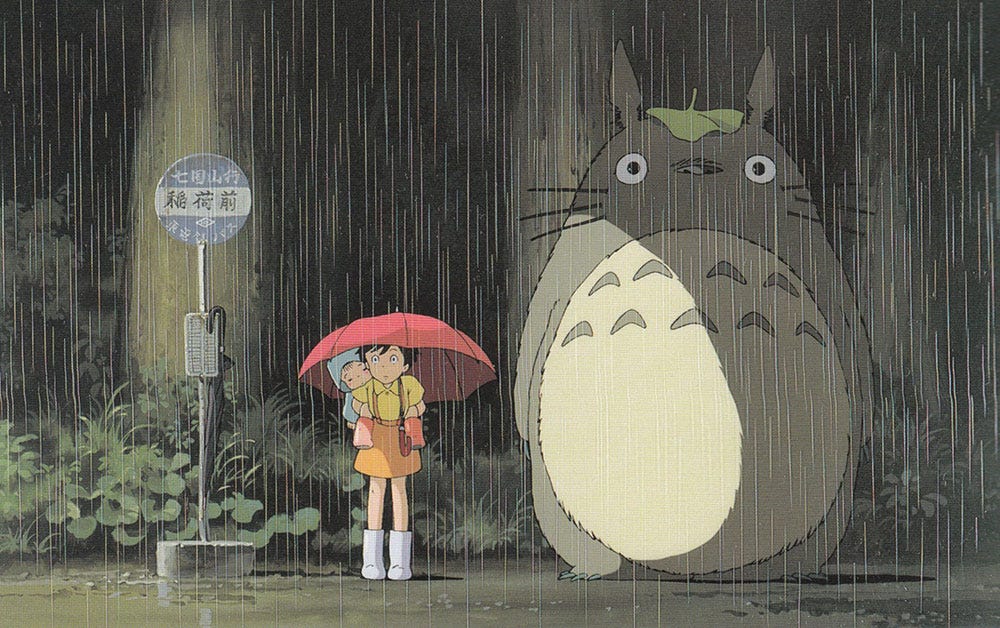
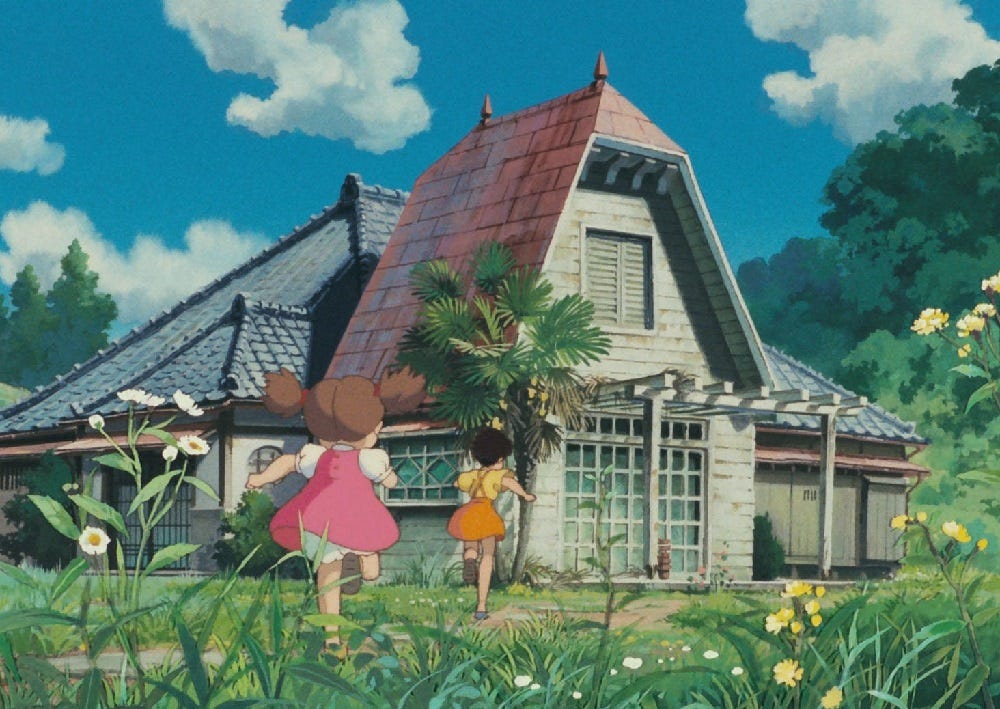
The story begins with a simple scenario: two sisters move into a new house in the Japan countryside with their father. From there, the story…. simply unfolds: they meet soot sprites, discover a massive forest spirit, wait at a bus stop in the rain. These are moments without tension that demands you find out what happens next.
There’s no monster or drama between the siblings or a disappointed father or a famine or anything like that. In fact, the closest thing to a “problem” in Totoro comes near the very end when the younger sister Mei runs away to see their sick mother who the girls are led to believe has taken a turn for the worse. Mei is in no deadly danger. The situation feels more like a misunderstanding that needs resolution. And the joy of the movie is in how the scenario unfolds, not in how anyone wins.
It’s a cozy scenario. Totoro as a story game might look like…
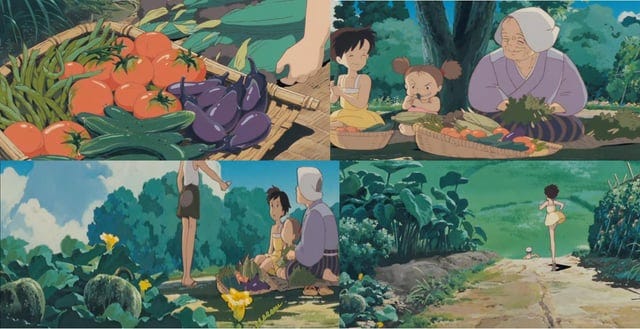
Were *I* running a game of TotoroI would show up with the same scenario premise and list out two things: locations and moments. All of ‘em quaint and cozy. Locations:
Moments:
And then without a ton of expositing or preamble, I would just put the lists on the table in front of other players, say the scenario premise, and then ask “what happens next?” Players could pick from the list or come up with their own location or moment and go from there. What this meansis that these are things story games are primed to explore: moments. The moment may be the Battle of Pelennor Fields or taking down Thanos or saving your friends from Darth Vader. Big dramatic moments with big dramatic question marks and exclamation points. “WILL OUR HEROES BE ABLE TO…?!!” But it could also be Frog and Toad flying a kite. Or a superhero family doing their spring cleaning. Or a group of knights exploring a wilderness formed in six-mile hexes (yes, I just implied hexcrawls don’t need to start with conflict). Point is, not everything needs to be solved from the get-go. Not every hill needs to be conquered or died on. Some things just happen. And then the next thing happens. And so on. Scenario-first play mattersbecause using “scenario” instead of “problem” opens up a wider range of experience. You can tell stories about mysteries, friendships, slice-of-life moments, or simple misunderstandings. The rules don’t demand a battle or a winner, just a shared situation worth exploring together. So next time you gather for a story game, open your mind to greater possibilities than “defeating the monster” and think too about wandering into a forest or waiting for the mail or cooking a meal for a loved one. You know, life things. A problem may emerge (or more than one, c’est la vie), but it doesn’t have to start there. Start with a scenario, build together, and end when it feels right. Because sometimes, good stories don’t need a problem at all. Story Games Sojourn is free today. But if you enjoyed this post, you can tell Story Games Sojourn that their writing is valuable by pledging a future subscription. You won't be charged unless they enable payments.
|
Wednesday, 27 August 2025
We don't need another conflict to get the game going





Subscribe to:
Post Comments (Atom)

-
Hi again, , Ready for some real, concrete things you can try right now? No fluff. No platitudes. Just practical support for your beautiful, ...
-
Title: KPop Demon Hunters Author: Mark Hobin Category: Action Content: Rating 8/10 I have only a passing familiarity with Korean pop. A ha...
-
, You're smart, successful, and you've always been able to handle a lot. So why do the smallest things feel so overwhelming lately? ...


No comments:
Post a Comment